Buy esfa.eu ?
We are moving the project
esfa.eu .
Are you interested in purchasing the domain
esfa.eu ?
domain@kv-gmbh.de · 0541-91531010
Buy esfa.eu ?
What is the definition of hypothetical-deductive thinking and deductive thinking?
Hypothetical-deductive thinking is a problem-solving approach that involves creating a hypothesis or educated guess about a situation and then testing it through deductive reasoning. Deductive thinking, on the other hand, is a logical process where one starts with a general statement or hypothesis and then examines the possibilities to reach a specific, logical conclusion. In essence, hypothetical-deductive thinking combines the generation of hypotheses with deductive reasoning to arrive at a solution, while deductive thinking focuses solely on drawing specific conclusions from general principles. **
What is the definition of hypothetico-deductive thinking and deductive thinking?
Hypothetico-deductive thinking is a scientific method that involves formulating a hypothesis and then testing it through observation and experimentation to reach a conclusion. It is a process of making educated guesses and then systematically testing them to determine their validity. Deductive thinking, on the other hand, is a logical process where conclusions are drawn based on a set of premises or assumptions. It involves reasoning from general principles to specific instances to reach a logical conclusion. **


Similar search terms for Deductive
Top-Angebote
Products related to Deductive:
-
Tiny Tots Teens Trends Montessori Baby Training, Infant Puzzle Early Education Toys, Busy Hand Grasping Ball For Baby Montessori Baby Training, Infant Puzzle Early Education Toys, Busy Hand Grasping Ball For BabyIntroduce Your Baby to the World of Learning The Infant Puzzle Early Education Toys are designed to foster cognitive and physical development in your little one. This Multifunctional Busy Ball for Montessori Baby Training is ideal for enhancing...79,97 $*Shipping: 0,00 $Secure redirect to the provider
-
Modern Mode Marketplace Brain Response Battle Cup Set Fun Baby Stack Game For Early Education, Speed And HandEye Coordination Training Brain Response Battle Cup Set Fun Baby Stack Game For Early Education, Speed And HandEye Coordination TrainingUnlock your child's potential with the Brain Response Battle Cup Set! Perfect for young learners, this exciting game combines fun and education to develop handeye coordination and response speed. Ideal for babies and toddlers, it helps improve...29,97 $*Shipping: 0,00 $Secure redirect to the provider
-
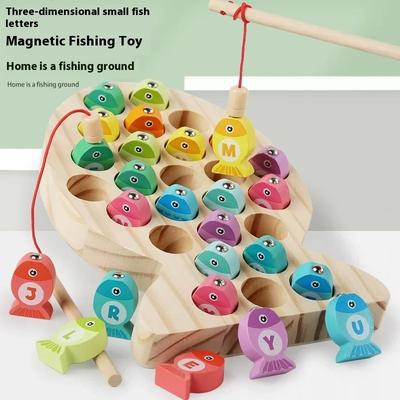
Inspire Select Wooden Montessori Fishing Toy Set Kids Number & Alphabet Learning Game For Early Education Training lettersMake learning fun and interactive with a playful educational experience. This Montessori fishing toy helps children develop essential skills while enjoying handson play. Designed for toddlers and young kids, this wooden learning toy combines...96,97 $*Shipping: 0,00 $Secure redirect to the provider
-
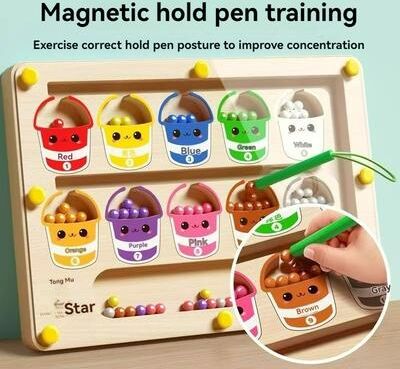
Multisell Products Hub Magnetic Maze Walking Ball, Children's Early Education Puzzle, Baby Concentration And Logic Thinking Training mediumImprove Concentration with Fun Learning: Introducing the Children's Magnetic Maze Walking Ball, an engaging tool that fosters your childs concentration and cognitive skills. This interactive game is designed to help develop logic thinking while...27,97 $*Shipping: 0,00 $Secure redirect to the provider


-
What is deductive and hypothetical thinking in pedagogy?
Deductive thinking in pedagogy involves starting with a general principle or theory and applying it to a specific situation to draw a conclusion. This approach helps students develop logical reasoning skills and understand the relationships between concepts. Hypothetical thinking, on the other hand, involves exploring different scenarios or possibilities to understand cause-and-effect relationships and make predictions. Both deductive and hypothetical thinking are important in pedagogy as they encourage critical thinking, problem-solving, and creativity in students. **
-
What is the meaning of deductive and inductive approaches?
Deductive reasoning is a logical process in which a conclusion is derived from a set of premises or assumptions. It involves moving from general principles to specific instances. On the other hand, inductive reasoning is a method of reasoning in which the premises are viewed as supplying strong evidence for the truth of the conclusion. It involves moving from specific observations to broader generalizations. Both deductive and inductive approaches are used in research and reasoning to draw conclusions and make predictions. **
-
What is the meaning of the deductive and inductive approach?
Deductive reasoning is a logical process in which a conclusion is derived from a set of premises or assumptions. It involves moving from general principles to specific instances. On the other hand, inductive reasoning is a method of reasoning in which the premises are viewed as supplying strong evidence for the truth of the conclusion, but do not guarantee it. Inductive reasoning involves moving from specific observations to broader generalizations. Both approaches are used in various fields such as science, mathematics, and philosophy to draw conclusions and make predictions based on available information. **
-
Can you give an example of the deductive learning method?
One example of the deductive learning method is a math class where the teacher presents a general rule or formula, such as the Pythagorean theorem, and then provides specific examples and exercises for students to apply the rule. The teacher starts with the general principle and then guides students through specific instances to demonstrate how the rule can be used. This approach allows students to understand the concept and then apply it to different problems. **


How do you solve the following question regarding deductive numerical reasoning?
To solve a question regarding deductive numerical reasoning, you need to carefully analyze the given information and look for patterns or relationships among the numbers. Start by identifying any consistent mathematical operations or sequences that can be applied to the numbers. Then, use these patterns to predict the next number in the sequence or to determine the missing number. It's important to approach the question systematically and consider all possible logical deductions before arriving at a conclusion. **
Could you please explain the difference between deductive and inductive reasoning to me?
Deductive reasoning starts with a general principle or premise and then applies it to a specific case to reach a logical conclusion. In contrast, inductive reasoning involves observing specific instances or examples and then drawing a general conclusion based on those observations. Deductive reasoning moves from the general to the specific, while inductive reasoning moves from the specific to the general. Both types of reasoning are important in critical thinking and problem-solving, and they are used in various fields such as science, mathematics, and philosophy. **
Top-Angebote
Products related to Deductive:
-
Uplifted Finds Interactive Ring Toss Training System Professional Early Education & Pediatric Fitness Infrastructure Interactive Ring Toss Training System Professional Early Education & Pediatric Fitness InfrastructureCommand ultimate developmental confidence with the Interactive Ring Toss Training System, a highperformance educational solution specifically engineered to act as a comprehensive tool for elite organization and superior technical ergonomics. Built...52,97 $*Shipping: 0,00 $Secure redirect to the provider
-
Tiny Tots Teens Trends Drawer Game Early Education Montessori Wooden Pitch Ball Box Preschool Learning Training Toy Drawer Game Early Education Montessori Wooden Pitch Ball Box Preschool Learning Training ToyThis Montessori Wooden Pitch Ball Box Drawer Game is a thoughtfully designed earlyeducation toy that transforms playtime into purposeful learning. Crafted for toddlers and preschoolers, it offers a handson, engaging way to support key developmental...39,97 $*Shipping: 0,00 $Secure redirect to the provider
-
Tiny Tots Teens Trends Montessori Baby Training, Infant Puzzle Early Education Toys, Busy Hand Grasping Ball For Baby Montessori Baby Training, Infant Puzzle Early Education Toys, Busy Hand Grasping Ball For BabyIntroduce Your Baby to the World of Learning The Infant Puzzle Early Education Toys are designed to foster cognitive and physical development in your little one. This Multifunctional Busy Ball for Montessori Baby Training is ideal for enhancing...79,97 $*Shipping: 0,00 $Secure redirect to the provider
-
Modern Mode Marketplace Brain Response Battle Cup Set Fun Baby Stack Game For Early Education, Speed And HandEye Coordination Training Brain Response Battle Cup Set Fun Baby Stack Game For Early Education, Speed And HandEye Coordination TrainingUnlock your child's potential with the Brain Response Battle Cup Set! Perfect for young learners, this exciting game combines fun and education to develop handeye coordination and response speed. Ideal for babies and toddlers, it helps improve...29,97 $*Shipping: 0,00 $Secure redirect to the provider
-
What is the definition of hypothetical-deductive thinking and deductive thinking?
Hypothetical-deductive thinking is a problem-solving approach that involves creating a hypothesis or educated guess about a situation and then testing it through deductive reasoning. Deductive thinking, on the other hand, is a logical process where one starts with a general statement or hypothesis and then examines the possibilities to reach a specific, logical conclusion. In essence, hypothetical-deductive thinking combines the generation of hypotheses with deductive reasoning to arrive at a solution, while deductive thinking focuses solely on drawing specific conclusions from general principles. **
-
What is the definition of hypothetico-deductive thinking and deductive thinking?
Hypothetico-deductive thinking is a scientific method that involves formulating a hypothesis and then testing it through observation and experimentation to reach a conclusion. It is a process of making educated guesses and then systematically testing them to determine their validity. Deductive thinking, on the other hand, is a logical process where conclusions are drawn based on a set of premises or assumptions. It involves reasoning from general principles to specific instances to reach a logical conclusion. **
-
What is deductive and hypothetical thinking in pedagogy?
Deductive thinking in pedagogy involves starting with a general principle or theory and applying it to a specific situation to draw a conclusion. This approach helps students develop logical reasoning skills and understand the relationships between concepts. Hypothetical thinking, on the other hand, involves exploring different scenarios or possibilities to understand cause-and-effect relationships and make predictions. Both deductive and hypothetical thinking are important in pedagogy as they encourage critical thinking, problem-solving, and creativity in students. **
-
What is the meaning of deductive and inductive approaches?
Deductive reasoning is a logical process in which a conclusion is derived from a set of premises or assumptions. It involves moving from general principles to specific instances. On the other hand, inductive reasoning is a method of reasoning in which the premises are viewed as supplying strong evidence for the truth of the conclusion. It involves moving from specific observations to broader generalizations. Both deductive and inductive approaches are used in research and reasoning to draw conclusions and make predictions. **
Similar search terms for Deductive
-
Inspire Select Wooden Montessori Fishing Toy Set Kids Number & Alphabet Learning Game For Early Education Training lettersMake learning fun and interactive with a playful educational experience. This Montessori fishing toy helps children develop essential skills while enjoying handson play. Designed for toddlers and young kids, this wooden learning toy combines...96,97 $*Shipping: 0,00 $Secure redirect to the provider
-
Multisell Products Hub Magnetic Maze Walking Ball, Children's Early Education Puzzle, Baby Concentration And Logic Thinking Training mediumImprove Concentration with Fun Learning: Introducing the Children's Magnetic Maze Walking Ball, an engaging tool that fosters your childs concentration and cognitive skills. This interactive game is designed to help develop logic thinking while...27,97 $*Shipping: 0,00 $Secure redirect to the provider
-
Football Flick Urban Skills Training Rebounder and Net Black & Orange 75cm H X 80cm W X 120cm DThe Flick Urban Skills Trainer is the number one piece of equipment you need for your garden or football club. The unique design is scientifically proven to improve your core skills by up to 73%. Pass the ball to the front ramp and watch the ball come back to you at different heights and angles. Use the rebounder net on the reverse side to improve your touch and control or use the net in the middle of the trainer as a target to help your accuracy. The tunnel that runs through the rebounder ensures your passing improves over time. The Urban skills trainer has been designed to be used individually but has also helped hundreds of football coaches develop players at academy and professional level. The double sided rebounder is perfect for players of all abilities and provides the perfect mixture of training and fun. When you’re finished with your Skills Trainer, simply fold it down flat and store it in its very own carry bag. Football Flick114,99 £*Shipping: 0,00 £Secure redirect to the provider
-
PrecisionPLAY Skills Trainer Ramp RebounderPrecisionPLAY Skills Trainer Ramp Rebounder packs several training options into one setup. The angled ramp sends the ball back at different heights and angles. Good for control, volleys and quick reactions.Behind the ramp, a rebound board returns passes straight to your feet. In the centre, a...129,95 £*Shipping: 0,00 £Secure redirect to the provider
-
What is the meaning of the deductive and inductive approach?
Deductive reasoning is a logical process in which a conclusion is derived from a set of premises or assumptions. It involves moving from general principles to specific instances. On the other hand, inductive reasoning is a method of reasoning in which the premises are viewed as supplying strong evidence for the truth of the conclusion, but do not guarantee it. Inductive reasoning involves moving from specific observations to broader generalizations. Both approaches are used in various fields such as science, mathematics, and philosophy to draw conclusions and make predictions based on available information. **
-
Can you give an example of the deductive learning method?
One example of the deductive learning method is a math class where the teacher presents a general rule or formula, such as the Pythagorean theorem, and then provides specific examples and exercises for students to apply the rule. The teacher starts with the general principle and then guides students through specific instances to demonstrate how the rule can be used. This approach allows students to understand the concept and then apply it to different problems. **
-
How do you solve the following question regarding deductive numerical reasoning?
To solve a question regarding deductive numerical reasoning, you need to carefully analyze the given information and look for patterns or relationships among the numbers. Start by identifying any consistent mathematical operations or sequences that can be applied to the numbers. Then, use these patterns to predict the next number in the sequence or to determine the missing number. It's important to approach the question systematically and consider all possible logical deductions before arriving at a conclusion. **
-
Could you please explain the difference between deductive and inductive reasoning to me?
Deductive reasoning starts with a general principle or premise and then applies it to a specific case to reach a logical conclusion. In contrast, inductive reasoning involves observing specific instances or examples and then drawing a general conclusion based on those observations. Deductive reasoning moves from the general to the specific, while inductive reasoning moves from the specific to the general. Both types of reasoning are important in critical thinking and problem-solving, and they are used in various fields such as science, mathematics, and philosophy. **
* All prices are inclusive of VAT and, if applicable, plus shipping costs. The offer information is based on the details provided by the respective shop and is updated through automated processes. Real-time updates do not occur, so deviations can occur in individual cases. ** Note: Parts of this content were created by AI.